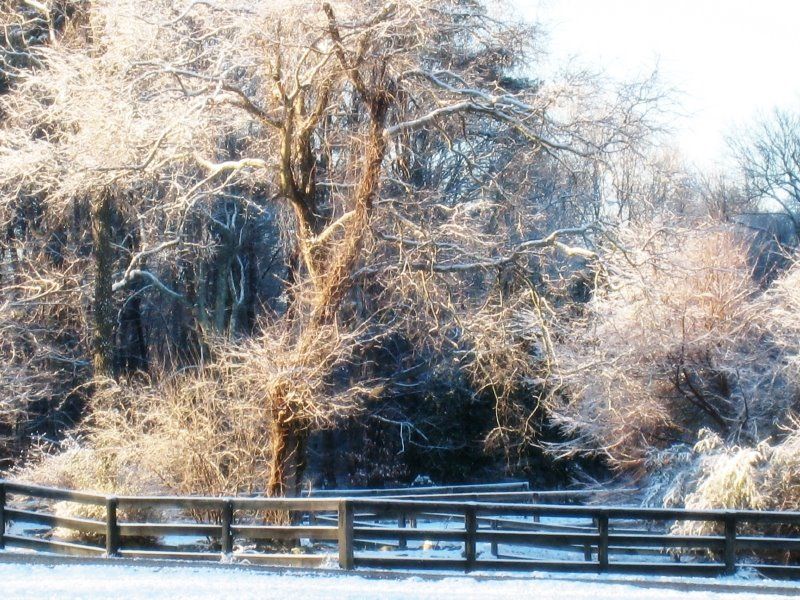
The Garden in Snow

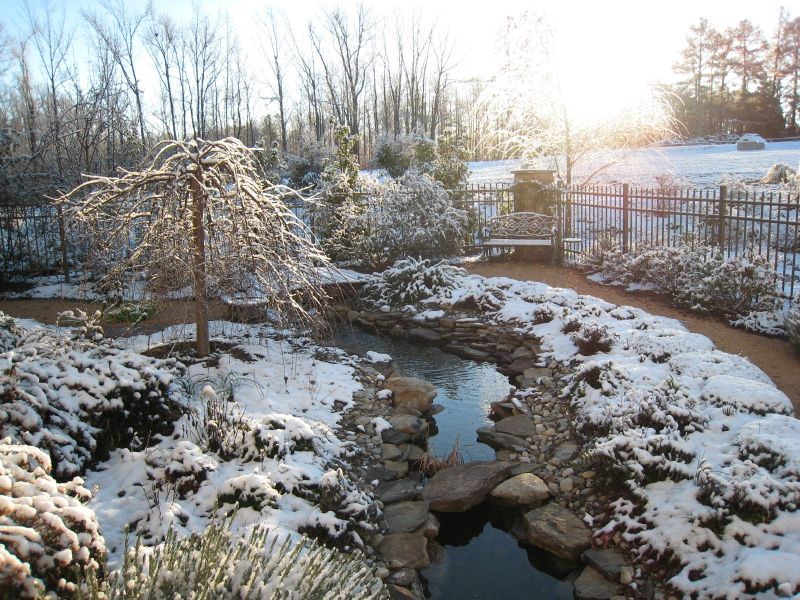
We had a light snow here yesterday. I took the opportunity to take a few photos in the morning light coming from the east side of the gardens.

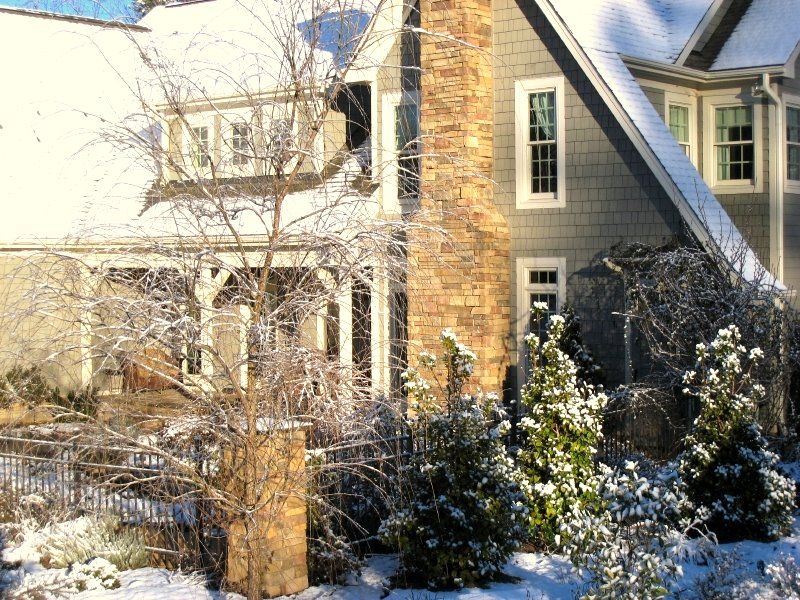
The house faces south into our meadow.


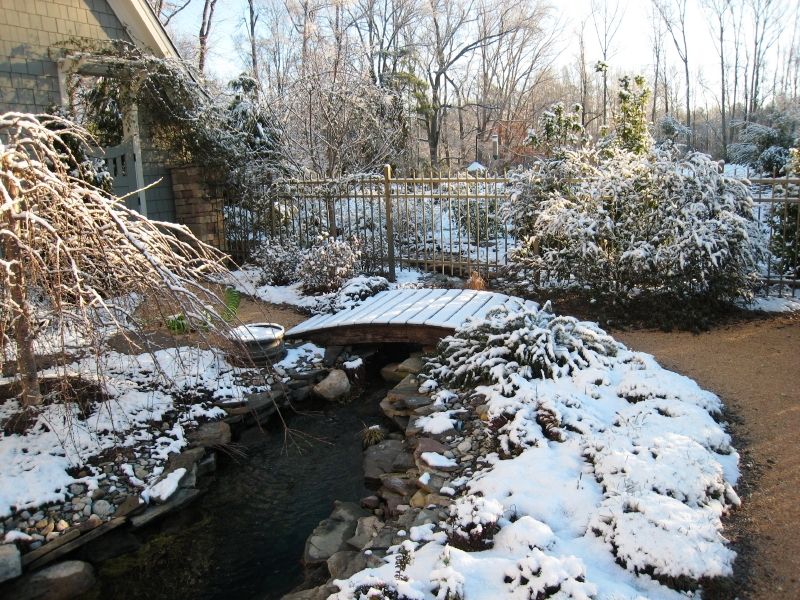
Inside the cottage garden, we have a stream. Our little garden paths cross a bridge from the front porch, then go to the bench in the corner.


From the bench in the corner, we cross the wooden bridge to go to the gable gate.


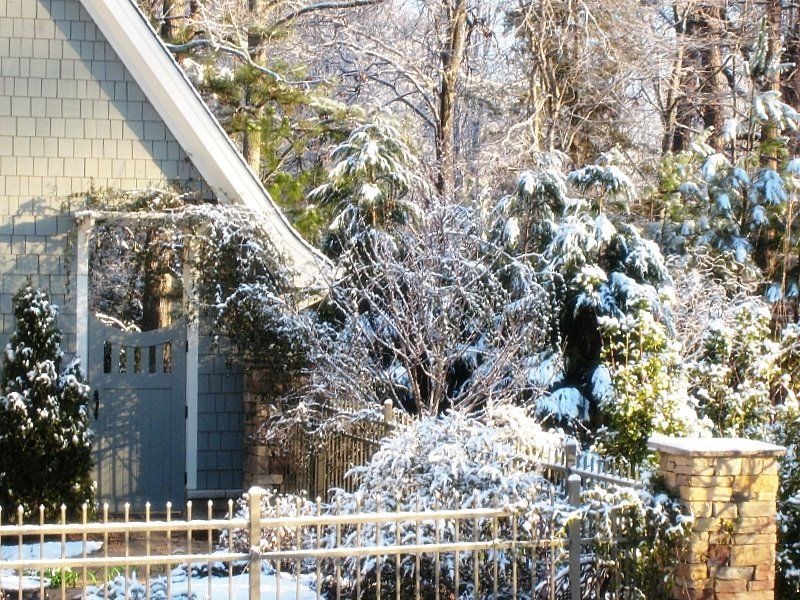
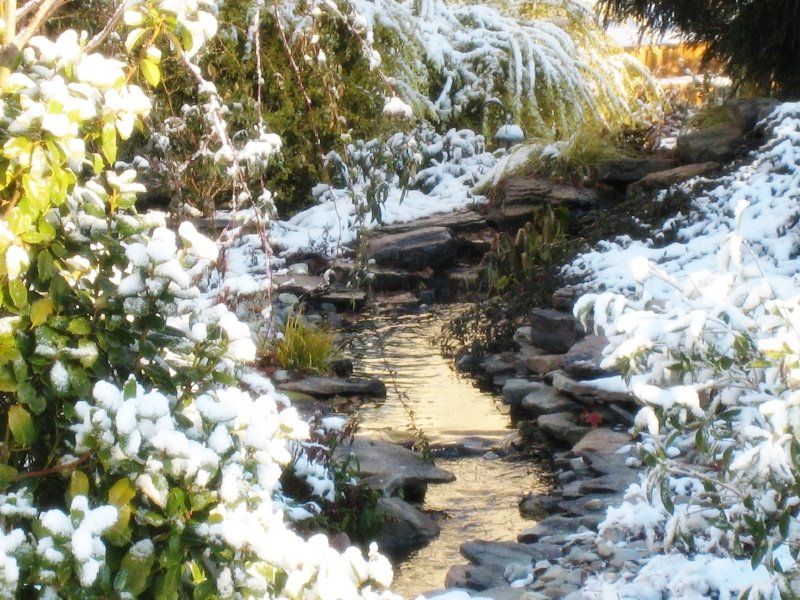
The gable gate opens to the east dining patio beside the waterfall. The stream flows both inside and outside the cottage fence.


The three large hollies are concealing the stream from the southeast angle.


This is part of the stream outside the fence. The waterfall is up to the right in the group of large cryptomeria.


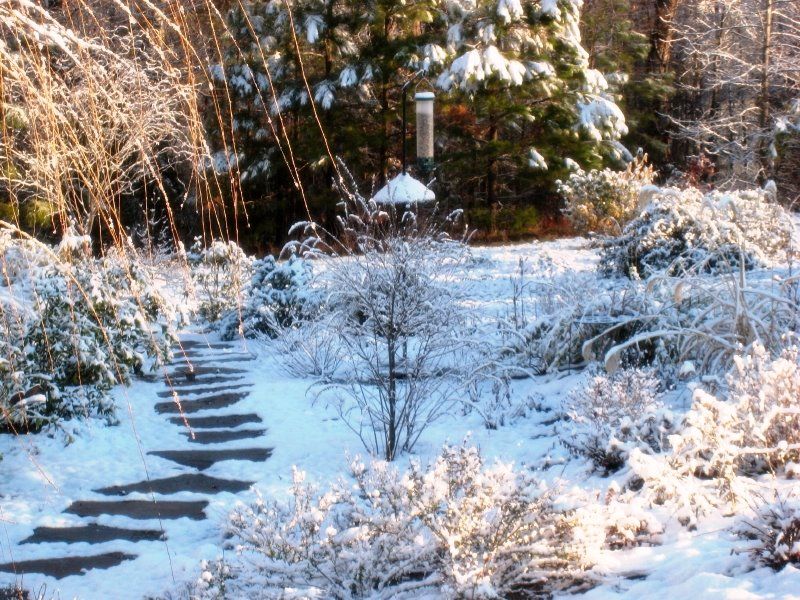
This is the path through the bird and butterfly garden. This is to the east of the stream. The birds eat here and then go to the stream to drink and bathe (weather permitting!).


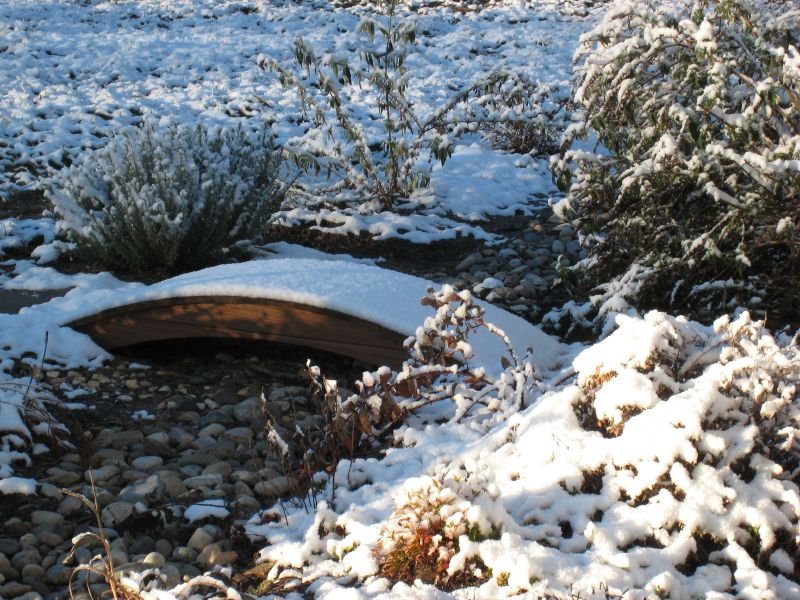
This is on the southwest side of our house. We built the dry stream bed to handle the runoff from the meadow up the slope to the south. The gutter downspouts that are inside our cottage garden are underground to feed the dry stream. I have planted moisture loving plants in the dry stream, but they also are able to withstand our dry summers with minimal water.


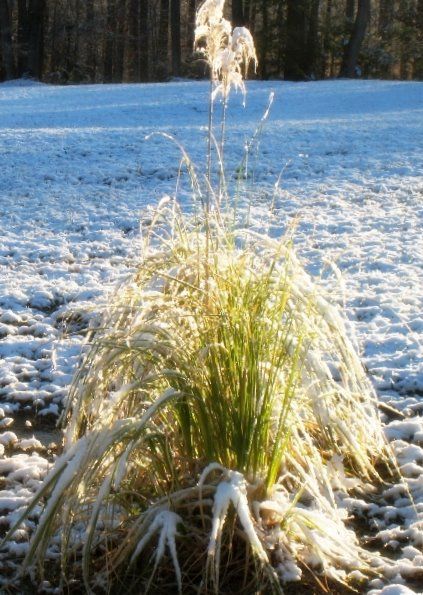
I love the structure of the ornamental grasses in the snow.


This is a view from our house out across the meadow. The board fenced area is supported by our neighborhood as the site of an old sawmill. This property was a dairy farm for 200 years.


Happy Snow!
Cameron

The Deer in Winter

Our winter here in North Carolina has been fairly mild so far. We've had a few days here and there of really cold temps. This weekend, I took note of the blooming forsythia and quince in our area.

The deer herd is here most every night. Judging from all the tracks in the mulch in the outer garden, they are foraging for food. Based upon last winter's foraging experience, I put a little 32" high wire edging fence around the cleyera and illicium evergreen shrubs. I placed the fence in a circle around the shrubs. Far enough away to make the deer stretch for a nibble, yet close enough that they don't jump inside the little fence. They leave both the cleyera and illicium alone in the summer, but will eat these if they get desperate for food in winter. I also encircle our southern magnolia with the same type edging fence to keep the bucks from rubbing their antlers on the tree.

My winter daphne is now blooming. The deer leave this alone.

They have taken a bite of the chaemacyparis 'cream ball', but obviously spit out the foliage as I've found the evidence next to the shrubs. The shrubs are not damaged.

The deer haven't touched the cotoneaster (several varieties), the clumping bamboo, the ornamental grasses, or our hollies. There are some types of hollies that are appealing to the deer, but apparently our hollies are not interesting to our particular deer herd. We have cornuta 'carissa', vomitoria varieties, and large hybrid oak leaf.

The heuchera have all been nibbled severely. In the summer, those are underneath my colocasia with monarda and buddleia blooming close by. All were left alone when protected by the other plants in the summer. Therefore, I don't protect my heuchera from deer damage in the winter. All of the heuchera varieties (lime, peach, purple) came back out with lush foliage last summer.

All of the other deer tolerant perennials are either untouched, or have died back for the winter so there is no concern. I leave the seed heads on many of the perennials to provide food and shelter for the birds.

We are in still a drought. As such, I've not spent a lot of time planning to extend the garden this year. When spring approaches, I'll decide whether or not to take on a new area. Even drought tolerant plants need rain to get established. Since our fall was extremely dry, I postponed new bulb planting until next fall.

Happy Gardening!
Cameron

Hardscape in the Garden

Aside from gardening with plants, most gardeners are interested in having structure and interest in the garden or landscape.

The fall and winter months provide a great time for building projects such as patios, walks, stepping stones and other “hardscape” projects for the garden. Not only are the bugs and snakes gone, but the temperatures are cooler.

Over the years we have used a professional landscaper for some projects while taking the DIY route with other projects. How did we decide? If the project requires special heavy equipment or if the materials are beyond our ability to handle safely, we hire a professional. We have used the same professional landscaper at our previous home and our current home.

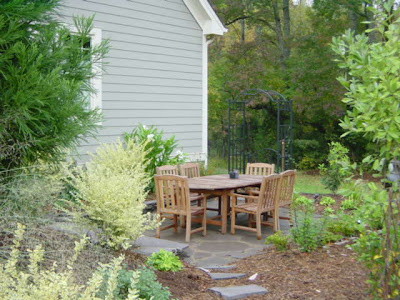
One of our family projects last fall was the building of a dining patio. One son (an archaeologist) dug out and leveled the ground for us. He also helped build the garden beds, including the planting of the shrubs and trees. The other son (a pharmacy student) laid the flagstone and the retaining walls. I designed and drew the plan, calculated and order materials. My husband assisted with the heavy lifting and breaking of the flagstone.

We used polymeric sand in the joints between the flagstone for our walk and one patio. It's made by Techni-seal and is used for dry-laid projects. It's a sand product with polymers that make it harden so that you don't have to keep sweeping sand or screenings between the stones. I did our patio one morning all by myself.

This photo was taken right after the patio was completed. It is already much more lushly planted. Even more, there is now a backyard swimming pool accessible through the arbor.

Vines on the arbor include jasmine and akebia. There is a sweet bay magnolia, ginger, winter daphne and gardenias for additional fragrance during different seasons.


Less difficult projects included laying stepping stones or adding garden benches and accents.

Before beginning any difficult project, we always purchase a book to help us understand the preparations, instructions and tools needed. Sometimes the information can be found online or by asking others. Still, having a book for a reference has been very helpful. If, after reading how to DIY the project, you feel overwhelmed, then perhaps it's time to call in a professional landscaper for help.

This is also a great time to find outdoor garden accessories or accents on sale. We purchased a large market umbrella for half price. We also purchased a teak and stainless outdoor shower to use with our swimming pool. We never would have purchased these items at full price. Planters, benches and other accents are often on sale this time of year.

I've also found that winter is a great time to find gardening books on sale. With the holiday season, there may also be offers of free shipping if you are purchasing online. Sitting by the fire sipping coffee or tea on a cold winter's day is a great way to plan your garden projects for spring and summer.

Happy Gardening!
Cameron